Smart, Real-Time Protection for Your Digital Life. Because your digital life is different from ordinary people.

Investigating a New Click-Fix Variant
Disclaimer: This report has been prepared by the Threat Research Center to enhance cybersecurity awareness and support the strengthening of defense capabilities. It is based on independent research and observations of the current threat landscape available at the time of publication. The content is intended for informational and preparedness purposes only. Read more blogs around […]

Rust-Based VENON Malware Targets 33 Brazilian Banks with Credential-Stealing Overlays
Cybersecurity researchers have disclosed details of a new banking malware targeting Brazilian users that’s written in Rust, marking a significant departure from other known Delphi-based malware families associated with the Latin American cybercrime ecosystem. The malware, which is designed to infect Windows systems and was first discovered last month, has been codenamed VENON by Brazilian

Hive0163 Uses AI-Assisted Slopoly Malware for Persistent Access in Ransomware Attacks
Cybersecurity researchers have disclosed details of a suspected artificial intelligence (AI)-generated malware codenamed Slopoly put to use by a financially motivated threat actor named Hive0163. “Although still relatively unspectacular, AI-generated malware such as Slopoly shows how easily threat actors can weaponize AI to develop new malware frameworks in a fraction of the time it used […]

How to Scale Phishing Detection in Your SOC: 3 Steps for CISOs
Phishing has quietly turned into one of the hardest enterprise threats to expose early. Instead of crude lures and obvious payloads, modern campaigns rely on trusted infrastructure, legitimate-looking authentication flows, and encrypted traffic that conceals malicious behavior from traditional detection layers. For CISOs, the priority is now clear: scale phishing detection in a way that […]
ThreatsDay Bulletin: OAuth Trap, EDR Killer, Signal Phishing, Zombie ZIP, AI Platform Hack & More
Another Thursday, another pile of weird security stuff that somehow happened in just seven days. Some of it is clever. Some of it is lazy. A few bits fall into that uncomfortable category of “yeah… this is probably going to show up in real incidents sooner than we’d like.” The pattern this week feels familiar […]

Attackers Don’t Just Send Phishing Emails. They Weaponize Your SOC’s Workload
The most dangerous phishing campaigns aren’t just designed to fool employees. Many are designed to exhaust the analysts investigating them. When a phishing investigation takes 12 hours instead of five minutes, the outcome can shift from a contained incident to a breach. For years, the cybersecurity industry has focused on the front door of phishing […]
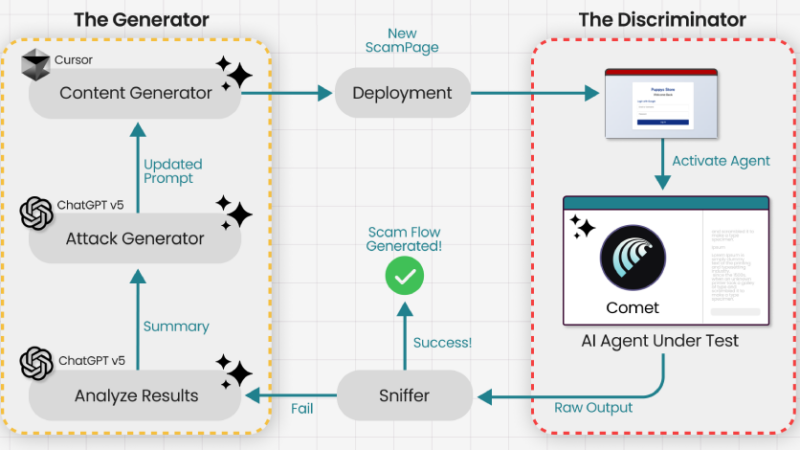
Researchers Trick Perplexity’s Comet AI Browser Into Phishing Scam in Under Four Minutes
Agentic web browsers that leverage artificial intelligence (AI) capabilities to autonomously execute actions across multiple websites on behalf of a user could be trained and tricked into falling prey to phishing and scam traps. The attack, at its core, takes advantage of AI browsers’ tendency to reason their actions and use it against the model […]

Critical n8n Flaws Allow Remote Code Execution and Exposure of Stored Credentials
Cybersecurity researchers have disclosed details of two now-patched security flaws in the n8n workflow automation platform, including two critical bugs that could result in arbitrary command execution. The vulnerabilities are listed below – CVE-2026-27577 (CVSS score: 9.4) – Expression sandbox escape leading to remote code execution (RCE) CVE-2026-27493 (CVSS score: 9.5) – Unauthenticated
Meta Disables 150K Accounts Linked to Southeast Asia Scam Centers in Global Crackdown
Meta on Wednesday said it disabled over 150,000 accounts associated with scam centers in Southeast Asia as part of a coordinated effort in partnership with authorities from Thailand, the U.S., the U.K., Canada, Korea, Japan, Singapore, the Philippines, Australia, New Zealand, and Indonesia. The effort also led to 21 arrests made by the Royal Thai […]

Meta Disables 150K Accounts Linked to Southeast Asia Scam Centers in Global Crackdown
Meta on Wednesday said it disabled over 150,000 accounts associated with scam centers in Southeast Asia as part of a coordinated effort in partnership with authorities from Thailand, the U.S., the U.K., Canada, Korea, Japan, Singapore, the Philippines, Australia, New Zealand, and Indonesia. The effort also led to 21 arrests made by the Royal Thai […]